
The world today is more connected than ever — and yet, for millions of people, help still feels impossibly far away.
We live in an age of technology, fast communication, and global progress. News travels instantly, donations can be sent with a click, and information is everywhere. But behind these advancements, there is a quieter truth: many families continue to live without access to basic needs, safety, opportunity, and stability.
This is where nonprofit work matters — not as an abstract idea, but as a real, human response to real-world gaps.
Nonprofit organizations exist because there are needs that systems alone cannot fully address. They step in where markets don’t reach, where policies fall short, and where geography, poverty, or crisis create barriers that leave people behind.
Today, nonprofit work is not just important.
It is essential.
The Gaps That Nonprofits Fill
Governments, businesses, and institutions play critical roles in society — but no system is perfect. Even in growing economies and popular cities, entire communities can remain underserved.
Some families live:
- Far from hospitals, schools, and grocery stores
- In areas inaccessible by road or public transportation
- Without reliable electricity, clean water, or communication tools
- In communities affected by seasonal disasters, conflict, or displacement
- One crisis away from hunger, homelessness, or job loss
Nonprofit organizations operate in these gaps.
They respond where help is needed most, not where it is easiest. They adapt quickly, listen closely, and build trust at the community level — often through volunteers who understand local realities and relationships.
In many cases, nonprofits are not replacing systems — they are bridging them.
When Crisis Becomes Everyday Life
For some families, crisis is not a temporary moment.
It is a daily reality.
Natural disasters, pandemics, economic instability, and climate-related events have made vulnerability more widespread and unpredictable. The COVID-19 pandemic revealed just how fragile many lives truly are — especially for those already living at the edge.
During lockdowns:
-
Markets closed
-
Transportation stopped
-
Informal workers lost income overnight
-
Families with no savings faced immediate hunger
Nonprofit organizations became lifelines — delivering food, sharing cash assistance, checking on families who had no phones or internet, and ensuring no one was completely forgotten.
And while headlines eventually moved on, many families are still recovering.
This is why nonprofit work continues long after emergencies fade from public attention. Recovery is not instant. Stability takes time.
Why Nonprofits Work Differently
Nonprofit work is deeply human.
It is not driven by profit margins or quarterly returns. It is guided by people, relationships, and long-term impact. This allows nonprofits to operate with flexibility, compassion, and context.
Nonprofits can:
-
Reach communities that are hard to access
-
Adapt quickly to changing needs
-
Provide support without complex requirements
-
Build trust through consistent presence
-
Prioritize dignity over efficiency
Often, the most effective solutions come not from large-scale programs, but from listening closely to what families actually need — food, light, safety, connection, and reassurance.
The Power of Small, Consistent Actions
One of the biggest misconceptions about nonprofit work is that impact must be massive to matter.
In reality, small, consistent actions create the most lasting change.
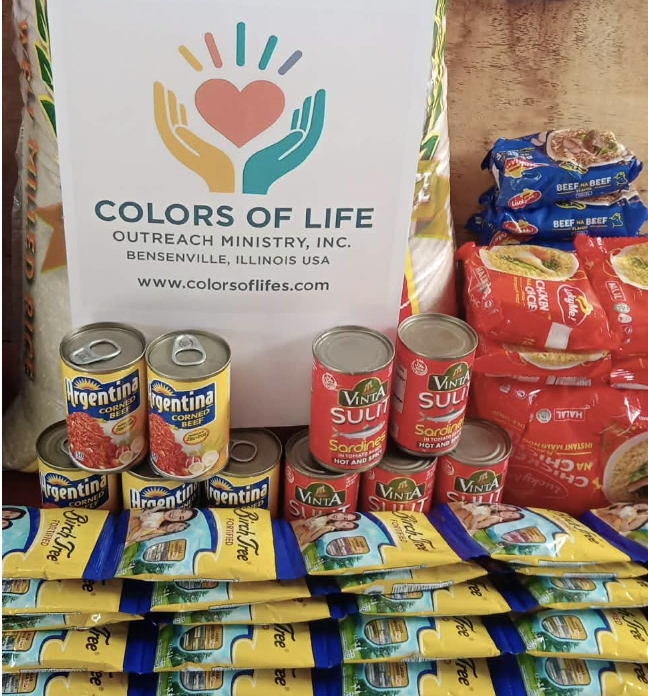
A food package delivered on time.
A solar light provided during a power outage.
A volunteer walking house to house in narrow alleys.
A message sent to a family saying, “You’re not alone.”
These moments may seem small from the outside, but to a family facing uncertainty, they can change everything.
Nonprofits understand that transformation often begins with stability — and stability begins with meeting basic needs.
Why Local and Community-Based Work Matters
Global problems require local solutions.
Communities are not one-size-fits-all. What works in one place may not work in another. Geography, culture, access, and trust all matter.
Community-based nonprofit work:
-
Respects local knowledge
-
Builds partnerships with trusted volunteers
-
Avoids one-time, disconnected aid
-
Creates long-term relationships instead of temporary fixes
When help comes from within or alongside a community, it is more sustainable, more respectful, and more effective.
Nonprofits as Stewards of Trust
Trust is one of the most valuable resources in humanitarian work.
Families open their doors. Volunteers give their time. Donors contribute resources. All of this depends on trust — trust that help will be used wisely, respectfully, and transparently.
Nonprofits serve as stewards of that trust by:
-
Being accountable
-
Sharing real stories and outcomes
-
Making careful decisions about limited resources
-
Choosing dignity over publicity
This responsibility is not taken lightly. Every decision carries weight — especially when resources are limited and needs are great.
Why Nonprofit Work Needs People, Not Just Funding
Funding is important — but people are what make nonprofit work possible.
Volunteers, partners, donors, storytellers, organizers, and community leaders all play a role. Nonprofits are ecosystems of human effort, not machines.
People contribute:
-
Time
-
Skills
-
Relationships
-
Compassion
-
Local insight
Together, these contributions multiply impact far beyond what any single person could do alone.
The World Has Changed — and So Have the Needs
The challenges facing communities today are complex and interconnected:
-
Economic inequality
-
Climate instability
-
Health crises
-
Migration and displacement
-
Limited access to education and opportunity
Nonprofit work has evolved in response. Today’s nonprofits must be flexible, ethical, transparent, and deeply rooted in community realities.
The work is no longer just about relief — it is about resilience, dignity, and long-term hope.
Why This Work Matters Now — and Always
Nonprofit work matters because it reminds us of something fundamental:
Human lives are not statistics.
Behind every program, every outreach, every distribution is a person — a parent trying to feed their children, a worker looking for stability, a family navigating uncertainty.
Nonprofits exist to meet people where they are, to respond with compassion, and to act when action is needed most.
In a world that often moves too fast, nonprofit work slows down long enough to care.
And that is why it matters more than ever.
How You Can Be Part of the Impact
You don’t need to start an organization to make a difference.
You can:
-
Volunteer your time or skills
-
Support a nonprofit you trust
-
Share stories that raise awareness
-
Partner with organizations serving communities in need
-
Commit to consistent, meaningful involvement
When individuals choose to care — and to act — nonprofit work becomes a powerful force for good.
Because progress is not only measured by what we build, but by who we choose to stand beside along the way.